
Africa’s social structure and political climate can be extremely complicated and volatile. Of particular importance are communities, particularly in a rural context1. In Northern and sub-Saharan Africa, communities represent diverse, tightly-knit structural units where cultural education is largely discreet and self-sufficient. There are distinct benefits to this, such as retention of a rich culture compared to more externally influenced communities. However, the aforementioned structure also allows propagation of false or deleterious beliefs about health; in particular HIV transmission and AIDS. This article will discuss the two most important cultural factors that negatively affect access to ART for treatment of HIV/AIDS in Africa.
Religious beliefs surrounding HIV/AIDS
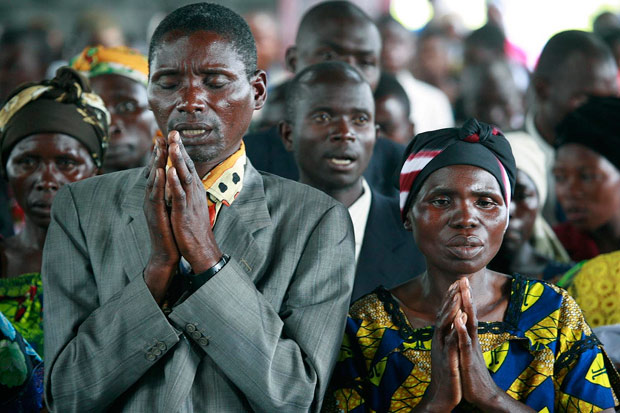
Africa’s spiritual identity is quite polarized, with most Africans identifying as either Islamic or Christian2. However, Africa is becoming increasingly Christian, with the majority of Africans in Northern and sub-Saharan Africa identifying as belonging to one of the many Christian denominations2. Unfortunately, it is a widely held belief within this community that HIV is God’s punishment to sinners. In some communities, a person who is HIV-positive is not allowed marriage and other rights one would assume are ubiquitous3. Not only is this a cause of significant distress to the HIV sufferer, but it also reduces rates of screening and when one knows they have the infection, they are much less likely to attempt to start treatment.
Cultural beliefs
A number of socio-cultural norms are also responsible for the much lower rates of ART access in sub-Saharan Africa. The most important of these is the cultural beliefs surrounding the efficacy of western medicine when compared to traditional African medicine. In sub-Saharan Africa, the perceived efficacy of western medicine is quite low and sub-Saharan Africans are very hesitant to access western medicine without consent from traditional healers in the community4. This leads to several problems in terms of health outcomes for people in these communities. Firstly, the overwhelming majority of the literature suggests that ART (in its many forms) is the only efficacious method for treating HIV/AIDS. Evidently, cultural beliefs may be a significant barrier in accessing the only proven effective medications. Moreover, traditional remedies may also pose a problem in terms of drug-drug interactions with ART if co-administered5.

What can be done?
Changing a community’s beliefs or practices can be hard at the best of times, much less when tradition is entrenched in spiritual belief. This is further complicated by access to rural communities. The only significant avenue for change in this context is education and recommendations for positive change. The problem with the current healthcare situation in sub-Saharan Africa is the fact that western and traditional healthcare exist as discrete, exclusive entities within the communities. In order for the effective medications to be accessed by those that need it most, traditional healers must work in concert with western medical professionals5. This will provide the access to the best care without derision and erosion of the strong culture that makes sub-Saharan Africa unique.
- Oramasionwu CU, Daniels KR, Labreche MJ, Frei CR. The environmental and social influences of HIV/AIDS in sub-Saharan Africa: a focus on rural communities. International journal of environmental research and public health. 2011;8(7):2967-2979.
- Ngong DT. Christianity in Africa. Wiley-Blackwell Companion to African Religions, The. 2012:208-219.
- Czerny M. AIDS and the African Church: To Shepherd the Church, Family of God in Africa, in the Age of AIDS. Paulines Publications Africa; 2005.
- Liverpool J, Alexander R, Johnson M, Ebba EK, Francis S, Liverpool C. Western medicine and traditional healers: partners in the fight against HIV/AIDS. J Natl Med Assoc. 2004 Jun;96(6):822-5.
- Langlois-Klassen D, Kipp W, Rubaale T. Who’s talking? Communication between health providers and HIV-infected adults related to herbal medicine for AIDS treatment in western Uganda. Social science & medicine. 2008;67(1):165-176.
 Bringing aid to the unaided


Wow, I had no idea that spiritual beliefs played such a huge role in AIDS transmission. The “sexual cleansing” was particularly alarming!
LikeLike