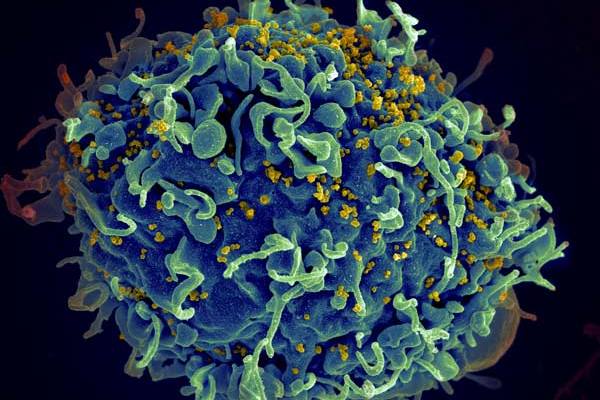

How does HIV infect human Hosts?
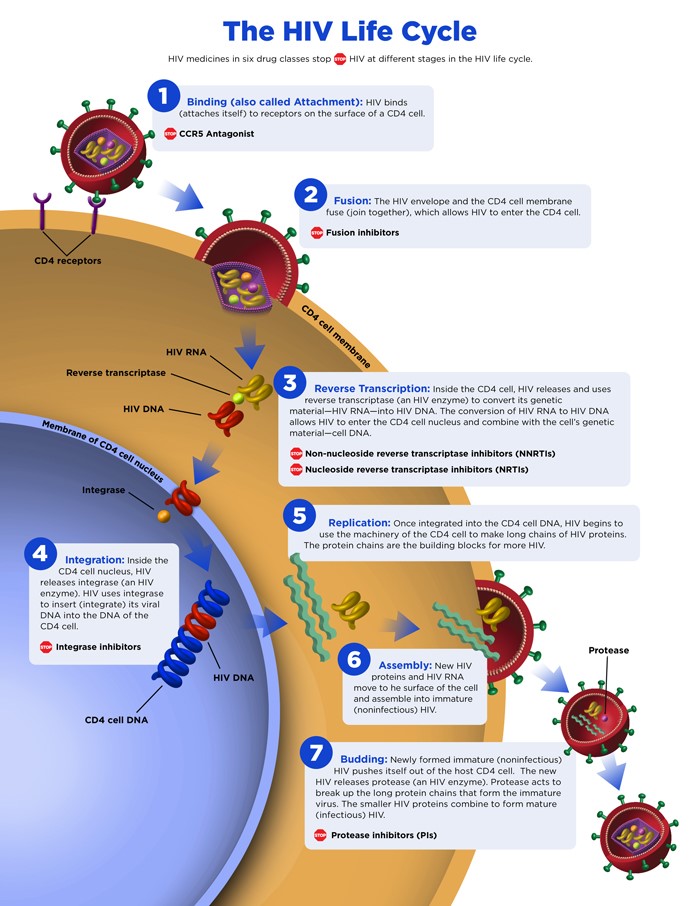
The Human Immuno-Deficiency Virus (HIV) is a retrovirus that, when transmitted to a new host, causes HIV infection and subsequent acquired immunodeficiency syndrome (AIDS)1. First detected in 1968, HIV now affects over 35 million people worldwide with these numbers continuing to grow2;. HIV has a well-established life cycle with several targets for pharmacotherapy. The lifecycle of the virus is most commonly described as a seven step process. This process first involves binding of the virus to receptors on the surfaces and ends with a mature HIV virion entering the host’s circulation:3
What are anti-retrovirals and how do they work?
Anti-retroviral Therapy (ART) is an umbrella term that defines a group of drugs that act on the HIV life-cycle. As shown above, these drugs act on almost every stage of the life-cycle:
- CCR5 antagonists like Maraviroc4; block the CCR5 co-receptor on CD4+ cells meaning less HIV can bind to these receptors and entry into the cell.
- Nucleoside reverse transcriptase inhibitors (NRTI) like Abacavir5 act as analogues to nucleosides and are incorporated into DNA. However, reverse transcription is then terminated due to a difference in structure when compared to the endogenous nucleosides.
- Non-Nucleoside reverse transcriptase inhibitors (NNRTI) like Rilpiverine5 act to achieve a common with NRTI’s – hindering the virus’ ability to form complementary DNA (cDNA). However, NNRTI’s act as inhibitors of the enzyme reverse transcriptase to do so.
- Integrase inhibitors such as Elvitegravir6 inhibit the enzyme integrase, blocking HIV’s ability to integrate cDNA to the hosts DNA.
- Protease inhibitors such as Lopinavir7 inhibit the maturation of newly formed HIV virions after they are budded from the host CD4+ cell.
Evidently, these drugs act on many different aspects of the HIV life cycle. Because of this ability to administer drugs with additive efficacy, a cocktail approach called highly active antiretroviral therapy (HAART)8 is usually advised whereby many of these drugs are administered at once.
How does ART help patients with HIV?
Although selecting and administering the correct treatment plan using ART may be complex, the use of ART exhibits profound benefits in patients with HIV infection and AIDS. This includes a reduction in HIV viral load, maintenance of immune function, reduction in opportunistic infections and an overall decrease in HIV burden9. In fact, ART therapy has been so effective that HIV has now become a manageable, chronic condition where patients have life expectancies comparable to HIV negative people10,11. Since its inception, ART has saved millions of life-years12 and improved the quality of life of millions of HIV infected people. However, in sub-Saharan Africa there are still around 790,000 AIDS related deaths a year. Tragically, there are still millions of people around the world who cannot access effective ART and over 1.5 million people die of AIDS related illness as a result2.
References
- Douek DC, Roederer M, Koup RA. Emerging concepts in the immunopathogenesis of AIDS. Annu Rev Med. 2009;60:471-84.
- World Health Organisation. HIV/AIDS. 2013 [28/03/2016]. Available from: http://www.who.int/gho/hiv/en/
- National Institute of Health. The HIV Life Cycle. 2015 [25/03/2016]. Available from: https://www.aidsinfo.nih.gov/education-materials/fact-sheets/19/73/the-hiv-life-cycle
- Biswas P, Tambussi G, Lazzarin A. Access denied? The status of co-receptor inhibition to counter HIV entry. Expert opinion on pharmacotherapy. 2007;8(7):923-933.
- Das K, Arnold E. HIV-1 reverse transcriptase and antiviral drug resistance. Part 1. Current opinion in virology. 2013;3(2):111-118.
- Métifiot M, Marchand C, Pommier Y. HIV integrase inhibitors: 20-year landmark and challenges. Adv Pharmacol. 2013;67:75-105.
- Wensing AM, van Maarseveen NM, Nijhuis M. Fifteen years of HIV Protease Inhibitors: raising the barrier to resistance. Antiviral research. 2010;85(1):59-74.
- Li TS, Tubiana R, Katlama C, Calvez V, Mohand HA, Autran B. Long-lasting recovery in CD4 T-cell function and viral-load reduction after highly active antiretroviral therapy in advanced HIV-1 disease. The Lancet. 1998;351(9117):1682-1686.
- Moore RD, Chaisson RE. Natural history of HIV infection in the_era of combination antiretroviral therapy. Aids. 1999;13(14):1933-1942.
- Fauci AS, Folkers GK. Toward an AIDS-free generation. Jama. 2012;308(4):343-344.
- Deeks SG, Lewin SR, Havlir DV. The end of AIDS: HIV infection as a chronic disease. The Lancet. 2013;382(9903):1525-1533.
- Vermund SH. Millions of life-years saved with potent antiretroviral drugs in the United States: a celebration, with challenges. Journal of Infectious Diseases. 2006;194(1):1-5.
 Bringing aid to the unaided